Elumina

01 · Aesthetic periodontics

She asked for veneers; what she needed was to uncover her own teeth

She felt her teeth were small and uneven. The assessment found the gum was covering part of the crown.
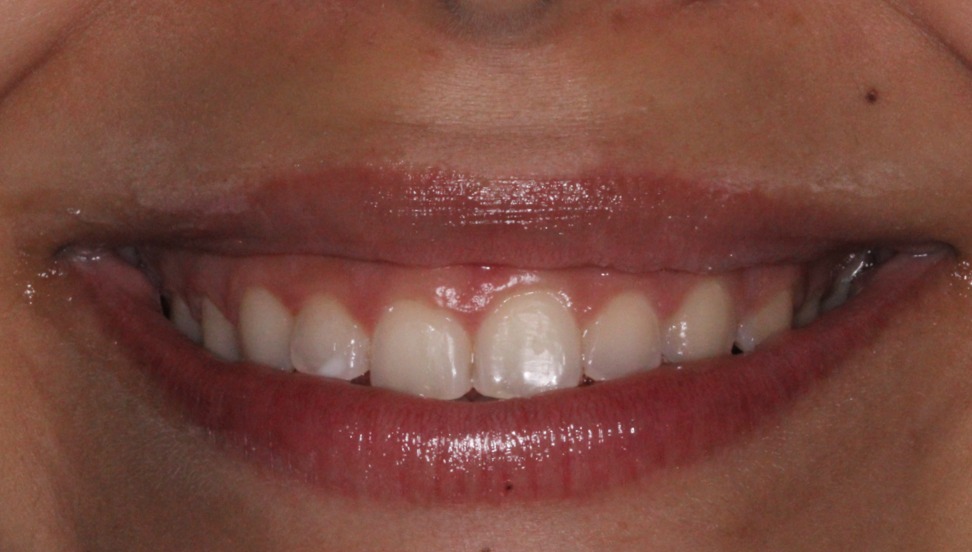
Close-up of the patient's smile with lips and chin partly visible; the upper teeth appear short beneath the gum.
Initial photographic record of the smile.
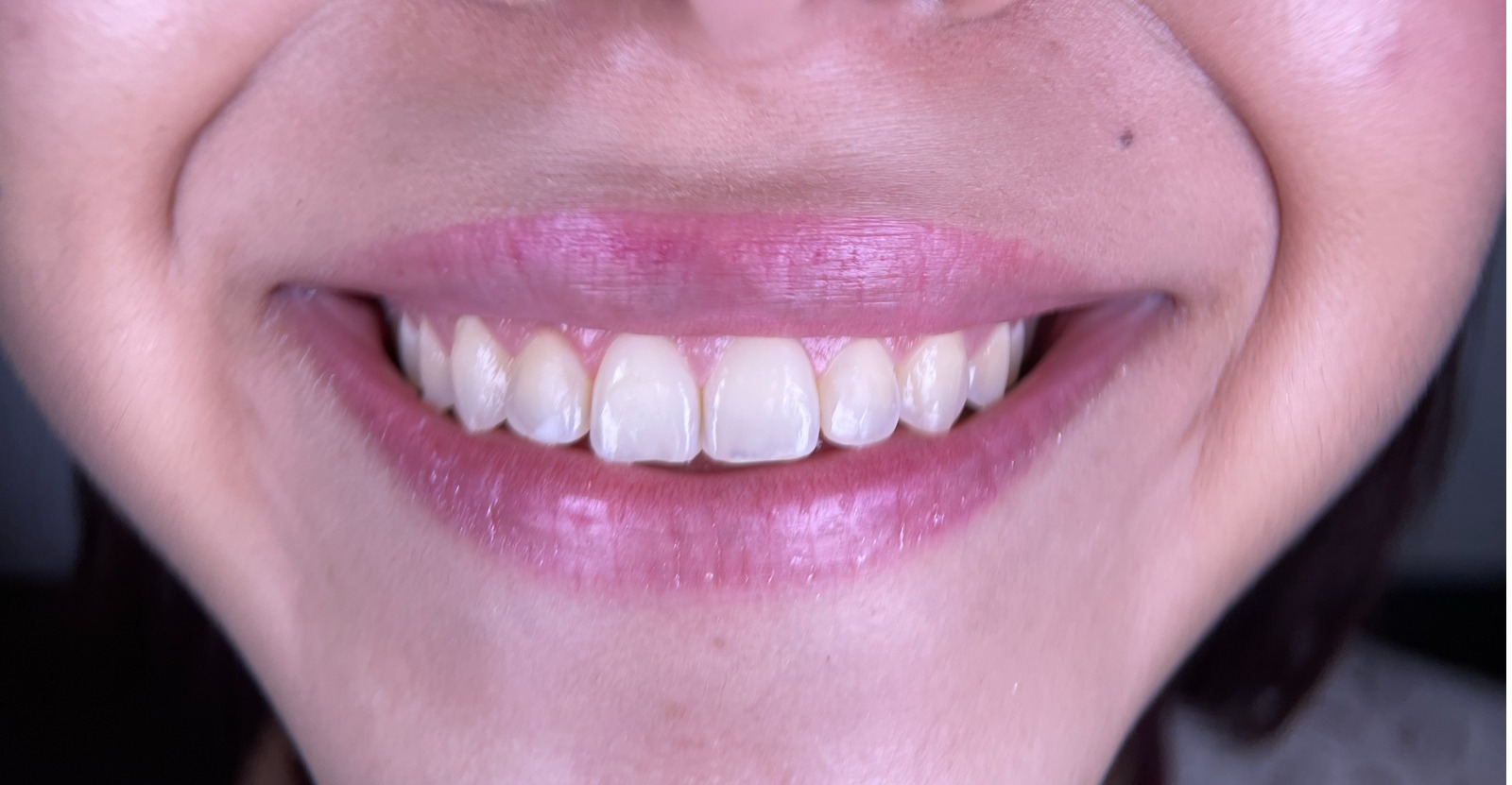
Close-up of the same patient's smile, photographed at a later time; the upper teeth appear longer.
Photographic record after treatment.

Photos taken at different times, with different lighting and framing. Shown without retouching.

How it was approached

  1. 01

    What she asked for

    She came in wanting veneers because she felt her teeth were very small and uneven.

  2. 02

    What the assessment found

    Altered passive eruption: the crowns of the teeth had never fully emerged. She did not have a gummy smile, but the gum-to-tooth proportion was not right.

  3. 03

    The treatment

    An aesthetic gum recontouring through crown lengthening on several teeth, which is a surgical procedure. Some time later, whitening was also carried out.

Clinical reasoning

A smile is not just teeth

The look of a smile depends on the muscles, gums and teeth. People who ask for veneers or whitening often have a different issue, which can only be identified on examination. In this case the choice was to keep her teeth, without filing them down or covering them.

What was achieved in this case

Her teeth now show in their natural proportion. According to the dentist who treated her, she now smiles with confidence, with her own teeth.

Not everyone whose teeth look small needs surgery. Like any surgical procedure, it requires prior assessment and its own aftercare.
02 · Implants and bone regeneration

Getting fixed teeth back after an accident

An accident years earlier cost him four teeth and a great deal of bone. His partial denture would not stay in place.

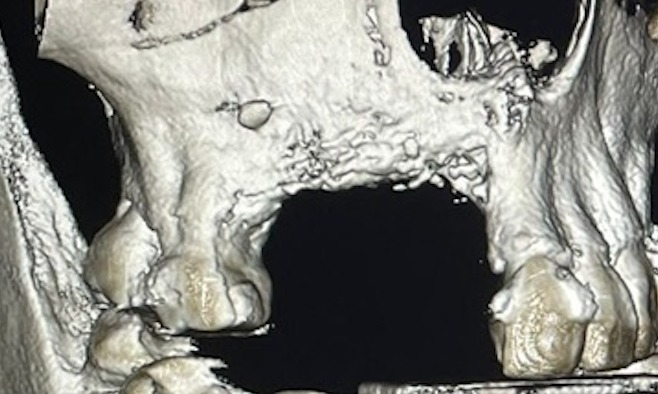
Grey three-dimensional reconstruction of an area of the upper jaw showing a toothless gap between neighbouring teeth.
3D imaging record of the area.
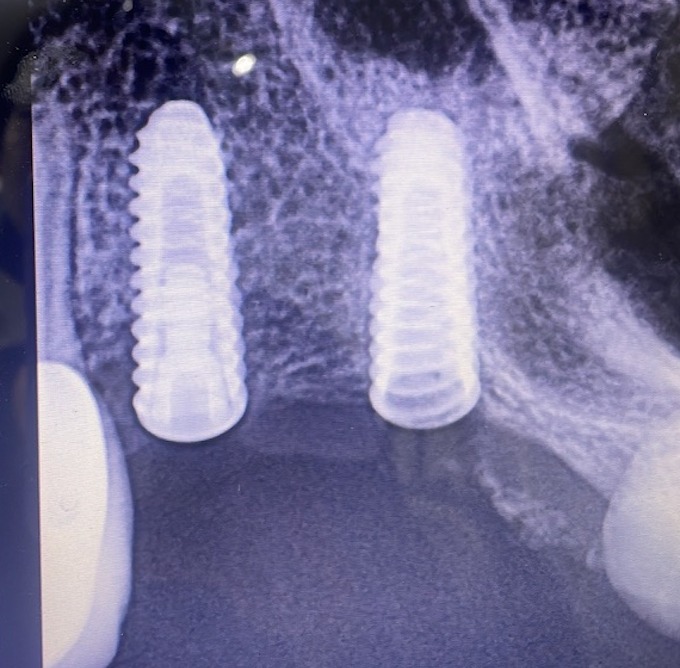
X-ray of an area of the upper jaw with visible dental implants.
Radiographic record with implants.

How it was approached

  1. 01

    The starting point

    He had lost four teeth, from the lateral incisor to the second premolar, along with a lot of bone. His partial denture kept falling out: he could not eat well, did not feel secure and even sport was uncomfortable.

  2. 02

    Regenerating bone

    First, vertical bone regeneration was carried out, followed by almost a year of healing.

  3. 03

    Implants

    The implants were then placed, together with a sinus lift.

  4. 04

    Fixed prosthesis

    Once the implants had integrated well, a fixed prosthesis was placed in that area.

Clinical reasoning

Bone first, then teeth

With defects this large, the bone had to be regenerated before implants could be considered. He was clear about his goal: fixed teeth, even if it took time and several surgeries.

What was achieved in this case

In this case treatment took about two years, between healing, implants and the prosthesis. According to the surgeon, the change in his quality of life was enormous.

The timing and stages are specific to this case. Each plan is defined after assessing bone, gums and general health.

03 · Oral rehabilitation

More than replacing crowns: rebuilding the bite

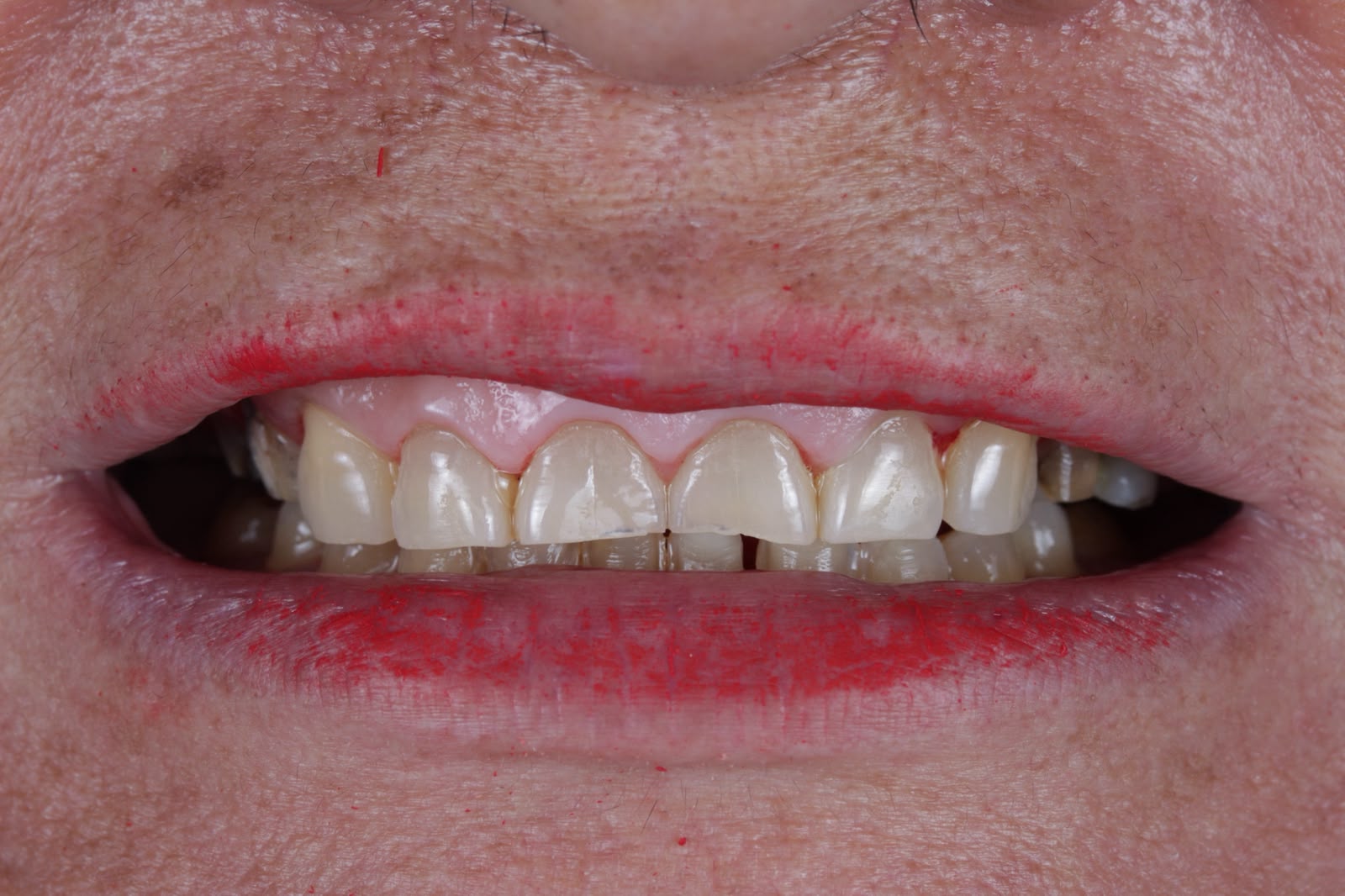
Her crowns kept coming loose, her teeth were starting to fracture and she noticed more and more wear and dental deterioration.

Close-up of the patient's smile before treatment; the upper teeth look worn, with fractured edges.
Initial photographic record of the smile.
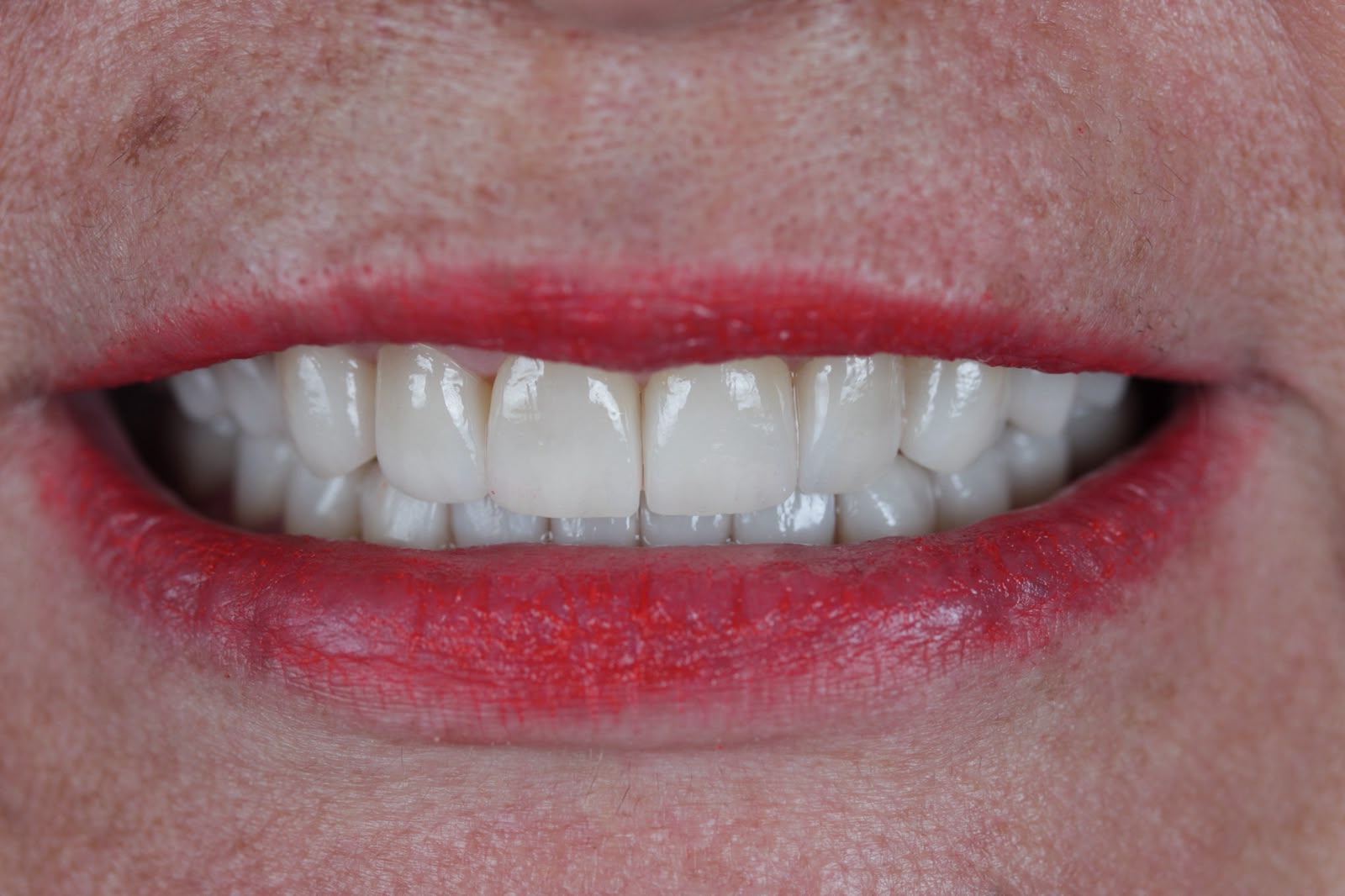
Close-up of the same patient's smile with the final ceramic restorations.
Photographic record after treatment.
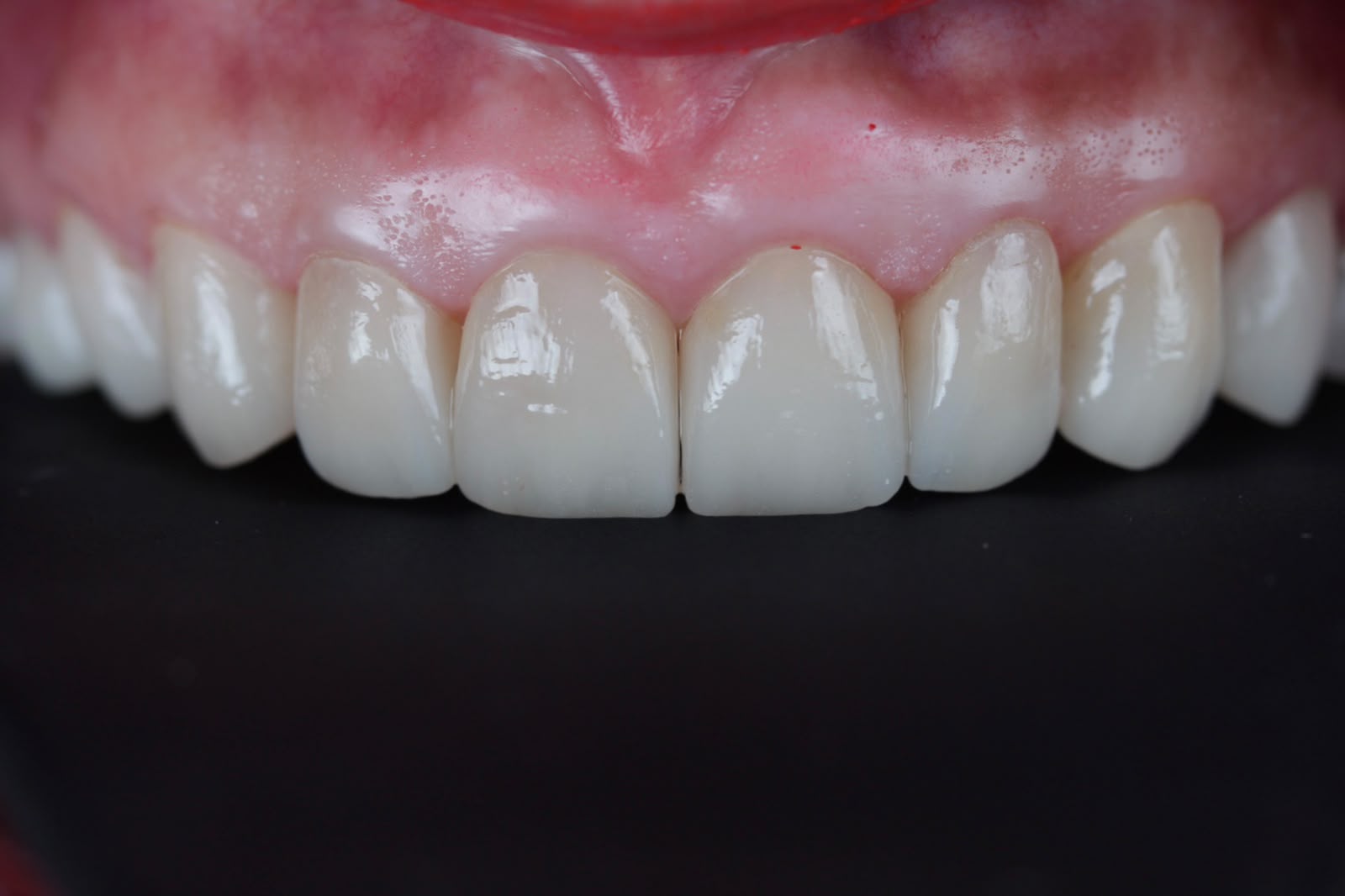
Close intraoral view of the upper teeth with ceramic restorations, against a black background.
Detail of the ceramic restorations.
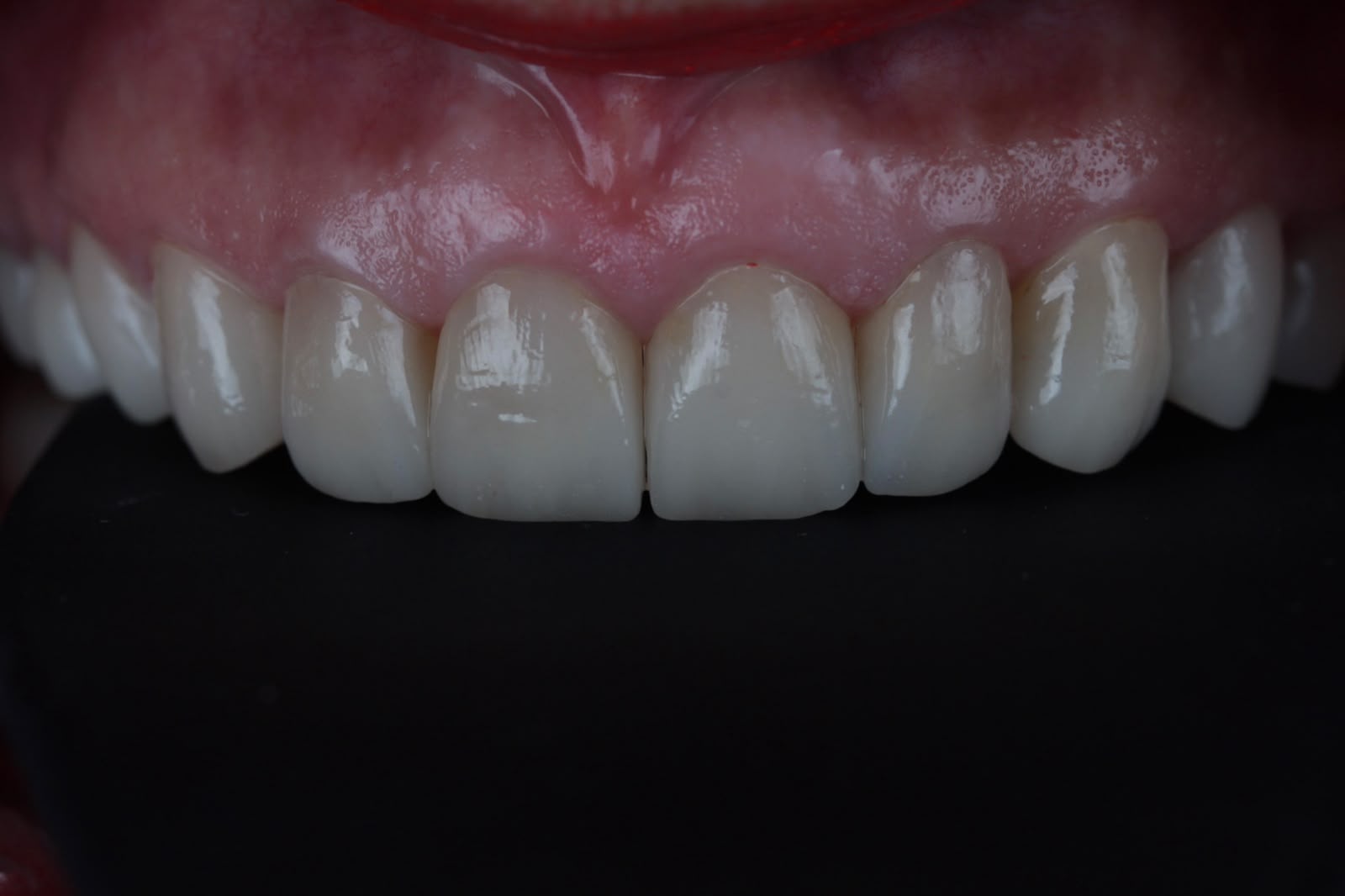
Second intraoral view of the upper teeth with ceramic restorations, from another angle.
Detail of the ceramic restorations, another angle.

Photos taken at different times, with different lighting and framing. Shown without retouching.

How it was approached

  1. 01

    Records and design

    We began by gathering all the necessary records: intraoral scans and intraoral and extraoral photographs, which allowed us to study her case and design a new bite tailored to her.

  2. 02

    Trial provisionals

    We placed provisional restorations for several weeks. This stage was essential to evaluate and adapt the new design and to check its function, comfort and appearance before making the final restorations.

  3. 03

    Final phase

    Once the design was approved, the previous restorations were removed, we carried out several try-ins to evaluate the shape, size and proportions of the teeth, and finally completed a full rehabilitation with ceramic restorations on all teeth.

Clinical reasoning

The problem went beyond the crowns

The comprehensive assessment showed severe wear and a bite without proper functional balance, which compromised the stability of her teeth and the function of her mouth. So the goal was not simply to replace the crowns, but to rebuild her bite, restore balance between her teeth and give her back proper chewing function.

What was achieved in this case

More than transforming a smile, we set out to recover something fundamental: the balance between appearance and function.

The stages are specific to this case. Not all wear requires restoring every tooth; each plan is defined after a comprehensive assessment.

Every smile starts with an assessment

If something in these stories sounds like your situation, tell us. We will examine your case and explain your options.